ECR Spotlight - Kimberley Reid
- Published 30 April 2026
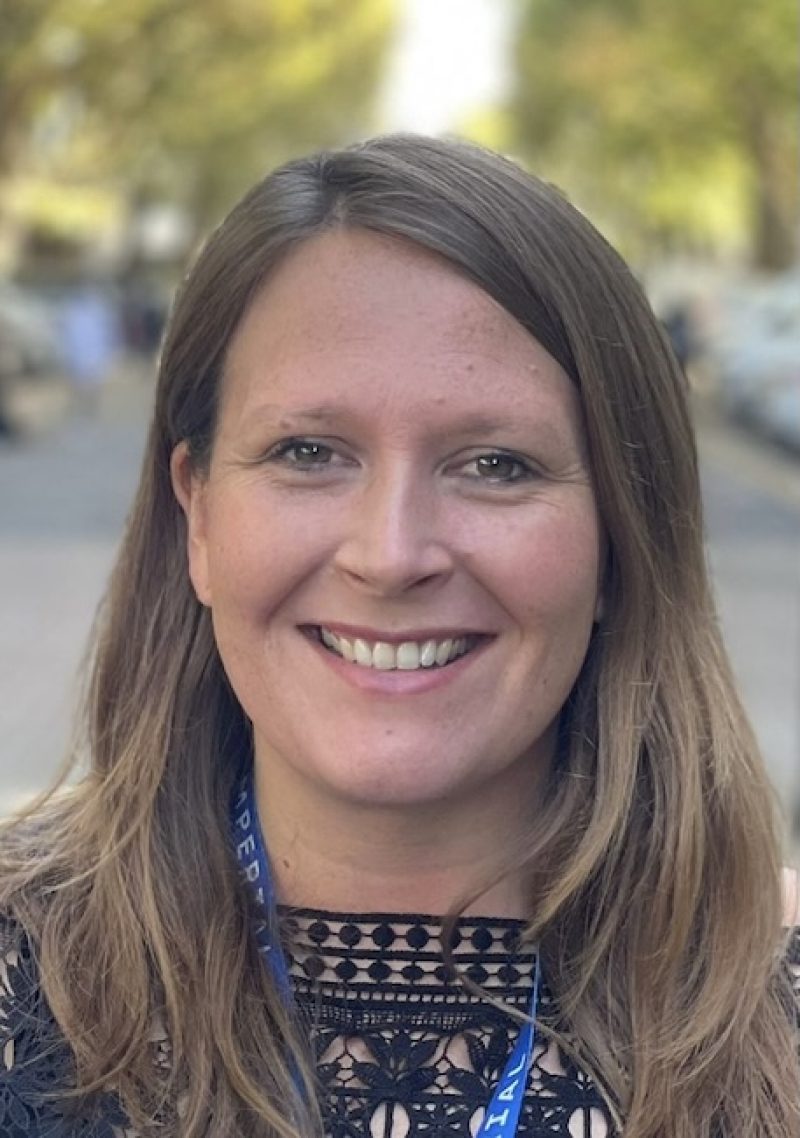
We are focusing on our ECR network and asking them several questions to gain an insight into their careers, In this session we spoke to Kimberley Reid from our Protein Post-Translational Modification (PPMT) cluster, based at Imperial College London.
Describe your research:
I use genome editing strategies to engineer human cells and mammalian organisms to contain patient identified variants of uncertain significance. A variety of molecular biology techniques are then employed to define how these rare genetic variants affect the everyday workings of a cell, to understand the cause of patient phenotypes and elucidate the molecular mechanisms of disease
What does your day-to-day research look like?
Very busy, and most days are different. A mixture of a) multiple wet laboratory experiments to genetically engineer human cells and perform molecular characterization b) data analysis and formulating slide decks containing latest data – even if its negative or a failed experiment c) supervising students d) writing or editing manuscripts, e) formulating and writing grant or fellowship applications, f) managing multiple projects with different collaborators. And of course keeping up to date with the latest published research
Share a moment, achievement, or milestone you are proud of:
Providing a diagnoses to many rare disease patients, identifying novel diseases, and when PhD students, Masters students and undergraduates choose my research projects to work on.
What drew you to this field?
My passion is to try to understand how genetic variation, even just one base change, can lead to catastrophic effects in the body, and to try to provide a better quality of life for the patients with rare genetic disorders. Functional genomics has this at its core, so it was a natural fit.
Where do you see your career heading?
I would like to progress from a post doc to getting an independent academic position and leading my own laboratory in the functional genomics field.
One piece of advice you would share:
Celebrate the highs and feel the lows, don’t give up and don’t let your ‘spark’ get dampened. Science is tough, there are many peaks and troughs, and the troughs hurt. But they hurt because we care. Our passion is to push the boundaries of science, and we pour ourselves into that. Setbacks of course are going to be disappointing, but it’s a vital part of the process and allows us to learn. But if we feel the lows, we must celebrate the highs, whether it’s a published paper, a funded grant, or just a successful experiment.
Tell us something about you beyond research:
I am a Mum to two children (and a cat), I’ve climbed mountains and run marathons. I’m exhausted all the time…but I wouldn’t have it any other way.