ECR Spotlight - Max Pickup
- Published 7 April 2026
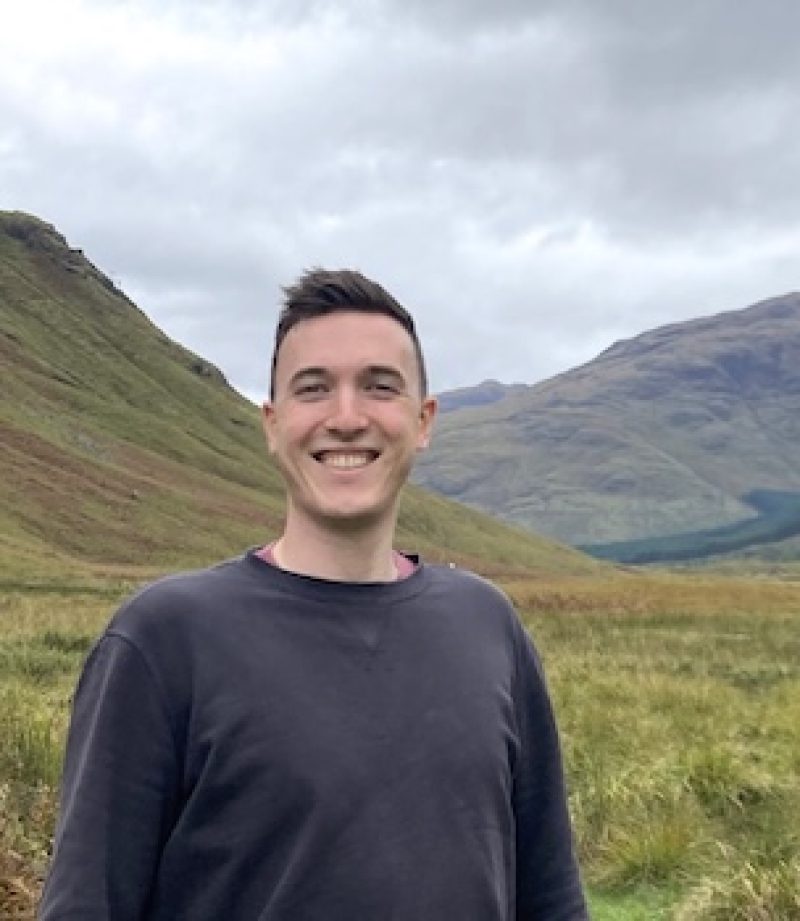
We are focusing on our ECR network and asking them several questions to gain an insight into their careers, In this session we spoke to Max Pickup from our Molecular Mechanisms cluster, based at the University of Edinburgh.
Describe your research:
My research focuses on understanding how genetic variation influences how human tissues respond to disease-relevant stresses. I work with primary human tissues such as lung, skin, and brain and expose them to controlled perturbations, including inflammatory and infectious stimuli. By combining these ex-vivo systems with single-nuclei genomics, we aim to identify molecular QTLs that reveal how genetic differences shape cellular responses.
What does your day-to-day research look like?
My day-to-day work is very hands-on and centered around human tissue biology. I process and culture primary tissues from surgical samples, expose them to defined perturbations, and prepare them for downstream genomic profiling such as single-nuclei RNA sequencing. A lot of my time is spent optimising tissue handling, nuclei isolation, and experimental conditions to preserve and measure meaningful biological signals. The goal is to generate high-quality datasets that capture how different cell types respond to stress in genetically diverse human tissues.
Share a moment, achievement, or milestone you are proud of:
Developing reliable and reproducible protocols for single-nuclei RNA sequencing in our human tissue models. Each tissue presents its own challenges, requiring extensive optimisation and iteration to establish workflows that consistently produce high-quality data. Bringing these protocols to a robust and reproducible standard has been a key milestone in my work.
What drew you to this field?
What drew me to functional genomics is the idea of using genetic variation as a starting point to uncover what’s really happening in human biology. Genetic studies can point to variants linked to disease, but the interesting part for me is understanding how those variants actually change how cells behave. I enjoy that mix of problem-solving and discovery, and the potential to connect those insights to treatment of disease.
Where do you see your career heading?
I’m interested in continuing to work at the interface of human tissue biology and genomics, developing experimental systems that make it possible to study disease mechanisms in physiologically relevant contexts. In the future, I hope to expand these approaches to explore disease states and models these for therapeutic application. Ultimately, I’d like my work to contribute to identifying new therapeutic targets and improve how we model human disease.
One piece of advice you would share:
Be collaborative. Impactful projects can grow from conversations and shared ideas. Working with others can expose you to new perspectives, methods, and questions that you might not encounter within your own area, and can lead you in new and unexpected research directions.
Tell us something about you beyond research:
Outside the lab, I enjoy spending time hiking and exploring new places. I also love bouldering, which challenges me both physically and mentally and gives me a great sense of accomplishment, something I especially appreciate when experiments don’t go as planned!