Interaction between germline and somatic variants in steatotic liver disease
Lead applicant: Sunay Usluer, The Wellcome Sanger Institute
Co-applicants: David J. Adams, Matt Hoare
Project overview
Metabolic dysfunction-associated steatotic liver disease (MASLD), part of the metabolic syndrome, is characterised by hepatocytic steatosis and inflammation leading to hepatic fibrosis and hepatocellular carcinoma (HCC). Although germline variants have been identified as modulators of disease progression, recent high-depth sequencing studies of the MASLD liver have identified recurrent somatic variants, that likely promote hepatocyte fitness. How these variants provide advantage to hepatocytes and whether they regulate the penetrance of germline mutations or MASLD disease progression is unknown.
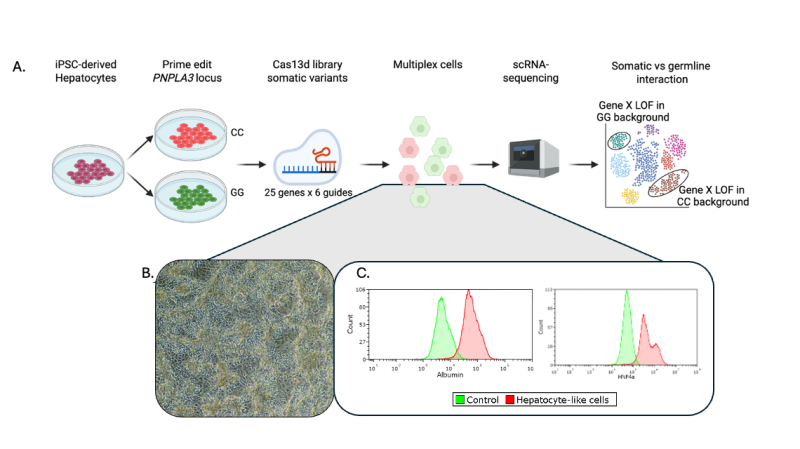
Thus, in this project we aim to identify interaction between germline and somatic variants implicated in MASLD. For this purpose, we will use prime editing to generate human induced Pluripotent Stem Cells (hiPSC) with rs738409 variant in PNPLA3 gene, a SNP associated with the highest relative risk of MASLD progression in multiple populations. After differentiating hiPSC- lines with reference or risk alleles at PNPLA3 into Hepatocyte-like cells, we will explore functional outcome of knock-down of 19 genes with recurrent loss-of-function variants using Cas13d-mediated RNA editing, followed by single-cell analysis (CarPoolSeq).
Through this strategy, we expect to identify pathways implicated in MASLD development in patients with distinct genetic backgrounds. In the long term, this approach will address whether there is a significant interaction between germline genetics and tissue-specific somatic mutations in the pathogenesis of chronic disease.