Modelling Novel RNU4ATAC and RNU6ATAC variants via Antisense-Mediated Knockdown
Lead applicant: Georgia Bonfield, The University of Exeter
Co-applicants: Matthew Johnson, Elisa De Franco, James Russ-Siilsby
Project overview
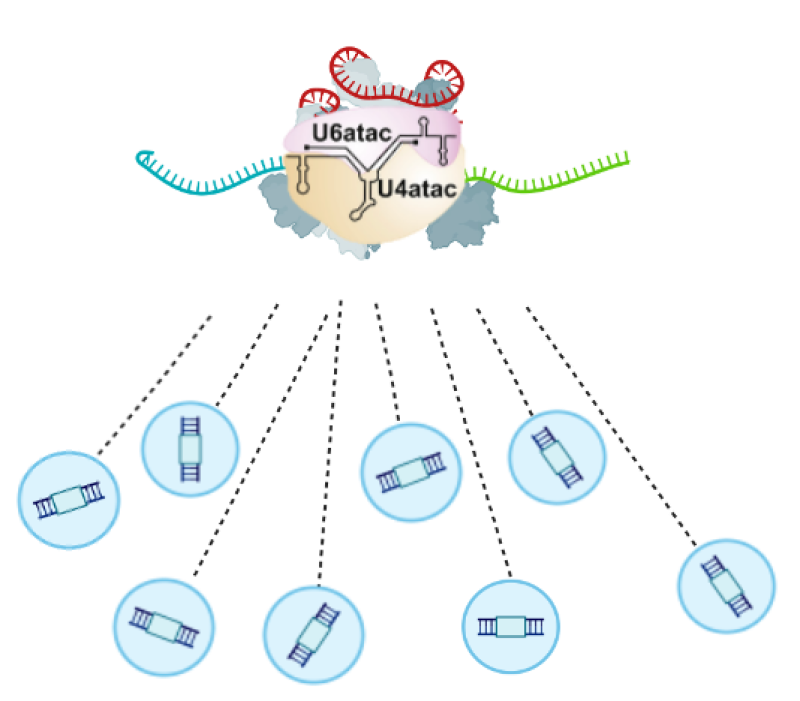
This project aims to develop a new functional genomics framework to investigate how disease-causing variants in small nuclear RNAs (snRNAs) disrupt gene splicing and contribute to rare human disease. Variants in snRNAs such as RNU4ATAC and RNU6ATAC are increasingly recognised as important causes of developmental and immune disorders, including autoimmune diabetes. However, studying these variants is challenging because snRNAs are non-coding, act in the nucleus, and patient samples are often unavailable.
To overcome these barriers, we will establish a scalable cellular model using antisense oligonucleotides to selectively reduce snRNA levels to disease-relevant ranges. This system will allow us to mimic patient-associated dysfunction and directly assess the impact of specific pathogenic variants. By combining knockdown with rescue experiments using wild-type or mutant snRNA constructs, we will measure effects on splicing of minor (U12-type) introns and downstream gene expression.
As proof of principle, we will model four pathogenic variants in RNU4ATAC and RNU6ATAC identified in individuals with confirmed splicing defects. Transcriptomic data generated in these models will be benchmarked against patient-derived RNA sequencing. This work will deliver a robust, reusable platform for functional interpretation of snRNA variants and support the FGx mission to link genomic variation to cellular function in rare disease.