Predicting Tissue-Specific PPTMs in Drug Targets with AI: From Genetic Variation to Common Human Traits
Lead applicant: Ayse Demirkan, University of Surrey
Co-applicants: Samaneh Kouchaki, Elham Khalili, Jun Liu
Project overview
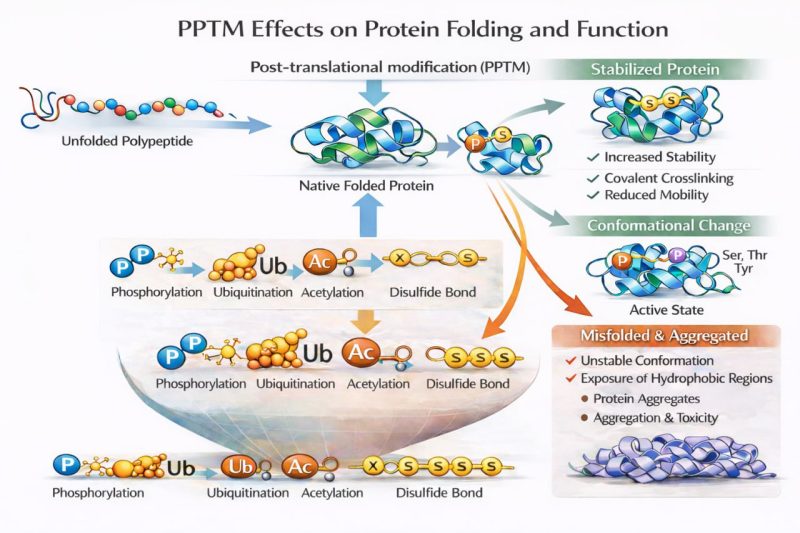
Growing evidence indicates that protein post-translational modifications (PPTMs) regulate protein stability, localisation, and interaction networks in common complex diseases, extending beyond rare disorders. Advances in machine learning (ML) now enable scalable, tissue-specific prediction of PTMs from coding variation. In the general population, PTMs may modulate drug response in proteins directly targeted by widely used therapies for common disorders (e.g., obesity, type 2 diabetes, stroke, cardiovascular disease, and dementia).
This pilot computational study led by Dr Demirkan from the University of Surrey aims to predict tissue-specific PTMs in proteins implicated in common complex disorders using UK Biobank exome data (~450,000 participants) and our curated PTM database (~1.8 million experimentally validated PTM sites). For each coding variant, sequence-, structure-, and context-based features, including BLOSUM62, physicochemical descriptors, motif disruption, disorder, secondary structure, and solvent accessibility, will be integrated to predict variant-induced PTM gain or loss. AlphaFold-predicted protein structures will be used to derive residue-level structural context around variant and PTM positions, including pLDDT, local exposure (accessibility), and 3D proximity to known PTM sites, enabling structure-aware modelling of PTM gain/loss and identification of PTM clustering hotspots.
Predicted PTMs will be associated with metabolic, cognitive, vascular, and mental health outcomes using regression and ML models. Mediation analyses will quantify the extent to which PTMs mediate genetic effects, clarifying their contribution to disease risk and precision medicine.